Can constipation cause pelvic pain?
Constipation and pelvic pain are more connected than most people realize, and both are things I treat regularly in my pelvic health practice. Your pelvic floor muscles play a direct role in your ability to relax and pass stool, which means when those muscles are not functioning well, constipation can follow. And when you are chronically constipated and straining, those same muscles take the hit over time.
If you are dealing with both constipation and pelvic pain, that is not a coincidence. The pelvic floor is the common denominator, and it is worth getting assessed so you can figure out what is actually driving your symptoms.
Constipation is one of the most common things I see and treat at my pelvic therapy clinic.
While most folks think of pelvic therapy addressing the bladder and urinary/sexual systems, the bowels are equally important and heavily influenced by many of the same factors.
Let's talk about constipation and how it could be causing some pelvic pain/pelvic discomfort and pelvic floor dysfunction.
The connection between constipation and pelvic pain
This all begins with an anatomy lesson and learning what exactly this whole system is all about.
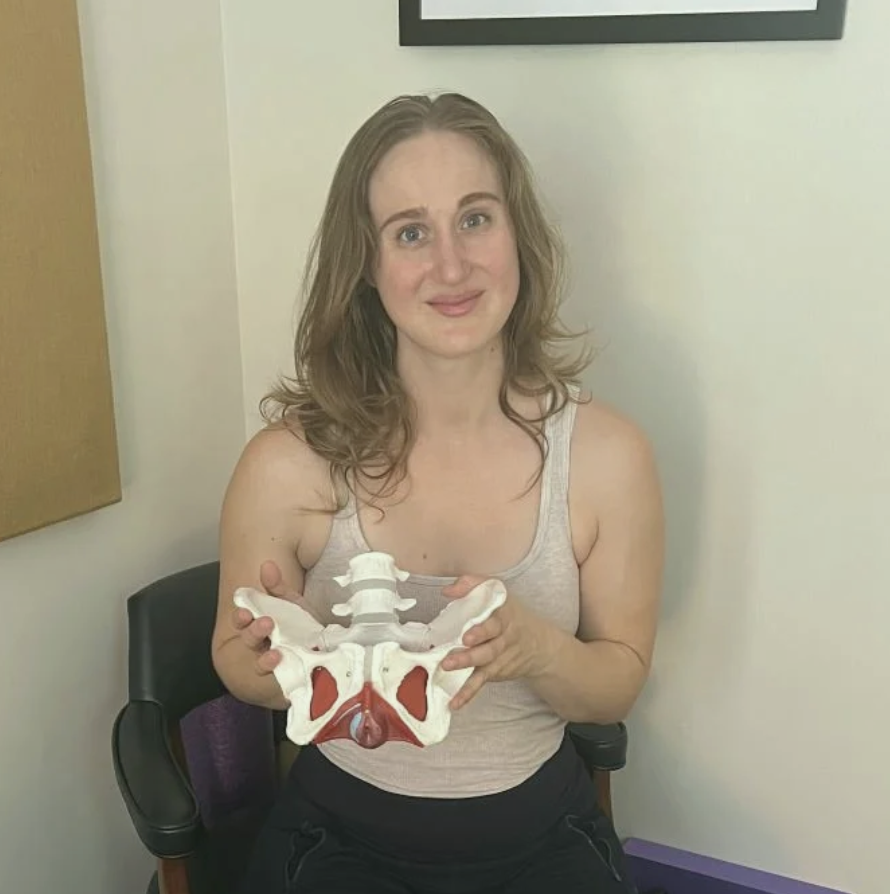
The "pelvic floor" simply refers to the group of muscles that sit at the bottom of the pelvis. They’re pretty important because they give support to all our organs. I like to think of the pelvic floor as the ultimate muscles for posture because they support us all day, every day!
Because the pelvic floor muscles support our organs, if we have pelvic floor muscle dysfunction, we usually experience problems with our bowel or bladder as those 2 organs are right in our pelvis.
Most people think that pelvic floor muscle dysfunction only happens in pregnancy or with childbirth. But that could not be further from the truth!
Just like any other muscle in the body, the pelvic floor muscles can become cranky for a variety of reasons and can then cause symptoms such as:
pelvic pain
urinary incontinence
a feeling of heaviness in the pelvis
uncontrolled gas
constipation
...and more
This means that all of these symptoms are connected to each other, with the common denominator being the pelvic floor muscles and pelvic floor and core health.
How constipation affects your pelvic floor
According to the National Institute of Diabetes and Digestive and Kidney Diseases (NIDDK), part of the National Institutes of Health, "constipation is a condition in which you may have:
fewer than three bowel movements a week
stools that are hard, dry, or lumpy
stools that are difficult or painful to pass
a feeling that not all stool has passed."
The pelvic floor muscles directly affect your ability to relax and pass stool, and when you're unable to do that, symptoms of constipation mentioned above will show up.
If the pelvic floor muscles are already tight or not coordinating well, they can actually make it harder to have a bowel movement in the first place. Relaxing the pelvic floor is a necessary part of having a complete, comfortable bowel movement, and if those muscles aren't releasing the way they should, constipation can follow.
It can also work the other way: When you're constipated, your body works harder to do something that should be relatively effortless.
That straining puts a significant amount of downward pressure on the pelvic floor muscles, and over time, that repeated stress adds up.
Chronic straining can cause the pelvic floor muscles to become overactive or develop trigger points, which are essentially pain points in the muscle tissue. Those points can refer pain to other areas of the pelvis, which is why constipation and pelvic pain so often show up together, and why constipation and the decreased ability to empty your bowels can increase your risk of, and lead to, pelvic pain
This is why treating constipation in pelvic floor physical therapy isn't just about what you're eating or drinking. It's also about what your muscles are doing.
And also... chicken or egg? Is your pelvic floor muscle tone leading to constipation? Or are you constipated and then having pelvic floor muscle pain because of straining?
Signs your pelvic pain might be related to constipation
You exist. But really. These symptoms often show up together. So, if you're experiencing constipation, there is likely a pelvic floor involvement.
But to add more detail for you, I can assess your pelvic floor and see how your muscles feel and how they function. If you have pelvic pain secondary to being constipated, I'd be willing to bet that I'd find some angry pelvic floor muscles (that can feel better with treatment).
When to see a pelvic floor physical therapist
I would tell you that if you are experiencing chronic constipation or constipation coupled with pelvic pain (or just pelvic pain, but that's a different topic altogether), I would recommend you see a pelvic floor physical therapist.
There are many things we can do in Pelvic PT to figure out what the root cause is behind constipation, and especially the link between constipation and pelvic pain.
Because defecation is a bodily function that should be very regular, it's ideal to be seen sooner rather than later. But I know that most patients will try to handle their symptoms on their own and will reach out once they've tried some things that ultimately didn't solve the problem for good.
So, if that's you, now is a great time to reach out.
How pelvic floor PT can help with constipation-related pain
Pelvic therapy for constipation-related pain will focus on determining what the driving factor is. Is it your pelvic floor muscles, or is it something related to nervous system regulation and other system-wide effects?
From there, we will integrate specific interventions that will help your pelvic floor muscles fully relax, which will help your nervous system get into a state where defecation is more possible.
By doing both of those things, a reduction in pelvic pain is a goal, as is eliminating any constipation symptoms.
Depending on the results of a pelvic therapy exam, specific interventions will be performed and specific homework will be given to you between sessions.
Where to find pelvic therapy for constipation in Durham
If you are local to the Durham, NC area, I'd love to work with you inside my pelvic health physical therapy clinic. My clinic specializes in pelvic health and pelvic health treatment. Not just a part of what I do, but what I specifically do.
You don’t have to just deal with constipation or the pelvic pain that came secondary to it.
Pelvic floor PT can be intimidating, and pelvic floor conditions can feel embarrassing, hard, lonely, and frustrating. I'd love to help you overcome the pelvic concerns you have and get you back to feeling 100%.
If you’re ready to get started, please request an appointment. I'd love to help you.