Postpartum pelvic pain when walking: What’s normal, what’s not, and how Pelvic Floor PT can help
Postpartum pelvic pain is incredibly common, especially when walking or getting back into daily movement, but it’s not something you need to just push through. Pelvic pain after birth can come from several completely normal causes, like muscle soreness, birth-related strain, hormonal changes, or simple “too much too soon” postpartum activity, and most of them are highly treatable with pelvic floor physical therapy.
In this post, I’ll walk you through the most common contributors to postpartum pelvic pain, what’s normal versus what deserves more attention, and how pelvic floor PT, specifically postpartum physical therapy, at Durham Pelvic can help you recover safely and confidently.
What causes postpartum pelvic pain?
Postpartum pelvic pain can be caused by multiple factors.
Physical trauma from birth
Giving birth is a huge physical undertaking.
I like to tell my patients to treat the postpartum period like you are recovering from an injury, because many times, that can be true.
The most common birth injuries that I see in my practice are perineal tears from vaginal deliveries and incisions from C-sections.
We typically don’t think of an incision as an injury because it didn’t happen by accident like most traditional injuries do, but the healing required of an incision does put it on par with an injury in my book.
Birth can also involve other injuries such as nerve damage, tailbone injuries, or even pelvic fractures.
But if you’re pregnant and reading this, please don’t worry too much about those ones, as they are rarer. And if you happen to be the person who does incur a significant birth injury, that’s why we rehab!
As a pelvic physical therapist, I have seen wonderful recoveries from even severe birth injuries.
However, even if you had a vaginal delivery without any tearing, the strain that was on your pelvic floor during pregnancy and then delivery can cause muscle soreness.
If you ran a marathon, you’d likely have sore legs for the next few days. And giving birth is pretty much the equivalent of a marathon for the pelvic floor! So it is not uncommon at all for the pelvic floor and core muscles to need time to recover.
Doing too much too soon
Which leads me to my next point that simply doing too much too soon can cause pelvic pain when walking. As you recover from birth, your body may require more rest than usual.
This is hard if our minds feel at odds with our bodies.
I’ve had many women tell me they were having pain when walking but kept going for walks because they were going stir crazy in the house. And I acknowledge that mismatch can be so frustrating!
“Too much too soon” is very relative to each person.
When I’m working with patients, I never give a blanket statement about how much women should be doing in the postpartum period because it depends on SO many factors (like how active they were pre-pregnancy, how active they were during pregnancy, how their birth went and if there were any complications, how active their daily life requires them to be, etc.).
That’s why I actually don’t recommend the popular 5/5/5 rule (where postpartum mothers are advised to spend 5 days post-birth in the bed, 5 days on the bed, and 5 days around the bed) because some women don’t need 15 days of rest and others need many more than that.
But a rule of thumb is that if you notice pain after a particular distance of walking (say you feel fine for the first 10 minutes but then start to have pain after that) or after you’ve been really active in your day (getting groceries, cooking, taking care of your little one, etc.), then it may be a sign that you’re doing too much and would benefit from a little more rest.
Hormonal changes
Most people know that your joints become a little looser during pregnancy in preparation for birth.
This is great for making space for baby, but it can be not so great for a pregnant woman as the extra mobility can cause a lack of stability which in turn causes pain.
And as you may know, if you’ve given birth, your body does not snap back to its pre-pregnancy state as soon as the baby comes out (despite what popular media would have us believe.)
So the extra pelvic mobility is still there and it could be contributing to pelvic girdle pain in the pelvic area in general, the pubic symphysis, and other pelvic joints.
Pelvic floor, core, and hip weakness
Especially if the pelvic floor, core, and hip muscles are weak, they won’t be able to give your body the support it needs to feel good and that can cause pain.
And those muscles are often weak in the postpartum period either because they’re healing from pregnancy and birth like I described above, or because you weren’t able to be as active during your pregnancy and lost some strength as a result.
What’s Normal vs. Not Normal
If you just gave birth, here are a few normal pains you may experience:
Some pelvic or abdominal soreness
Some uterine cramping
Some vaginal bleeding
Some low back, hip, or pelvic achiness
Some pelvic pressure
Some vaginal sensitivity or discomfort
Some breast sensitivity
I prefaced each item in that list with the word some to indicate that none of these symptoms should be debilitating. If you’re having severe pain, that is not normal and you should reach out to your OB. Other serious symptoms that would not be considered a normal part of healing are clearly outlined by the American College of Obstetricians and Gynecologists on their FAQ page on postpartum pain. Feel free to read that page to determine if your pain may be an emergency.
Why walking worsens the pelvic pain
Though we usually don’t think of walking as a physically demanding activity, it actually requires a good base of strength and stability!
Walking requires us to be upright which makes the pelvic floor muscles work, and it requires us to stabilize our pelvis as we step one foot out in front of the other which makes our core and hip muscles work.
And if we happen to be pushing a stroller or walking up a Durham hill, that increases the challenge even more.
So if we are recovering from birth, walking, especially for any length of time, may be beyond our current physical capacity.
How Pelvic PT at Durham Pelvic can help with postpartum pelvic pain
In a physical therapy evaluation, I’d listen to your story, ask specific questions that can help me determine why you might be having pain, and then do a full-body assessment where I look at how your muscles are functioning.
From there, we create a gameplan based on what I found so that I can help you go from pain with walking to painfree running (Or whatever you want to do! I don’t force patients to run, but I do see many postpartum women who have a goal to get back to running.)
Your sessions will often involve hands-on work, exercises, and strategizing about how to build a healthy lifestyle (especially with a new little one!).
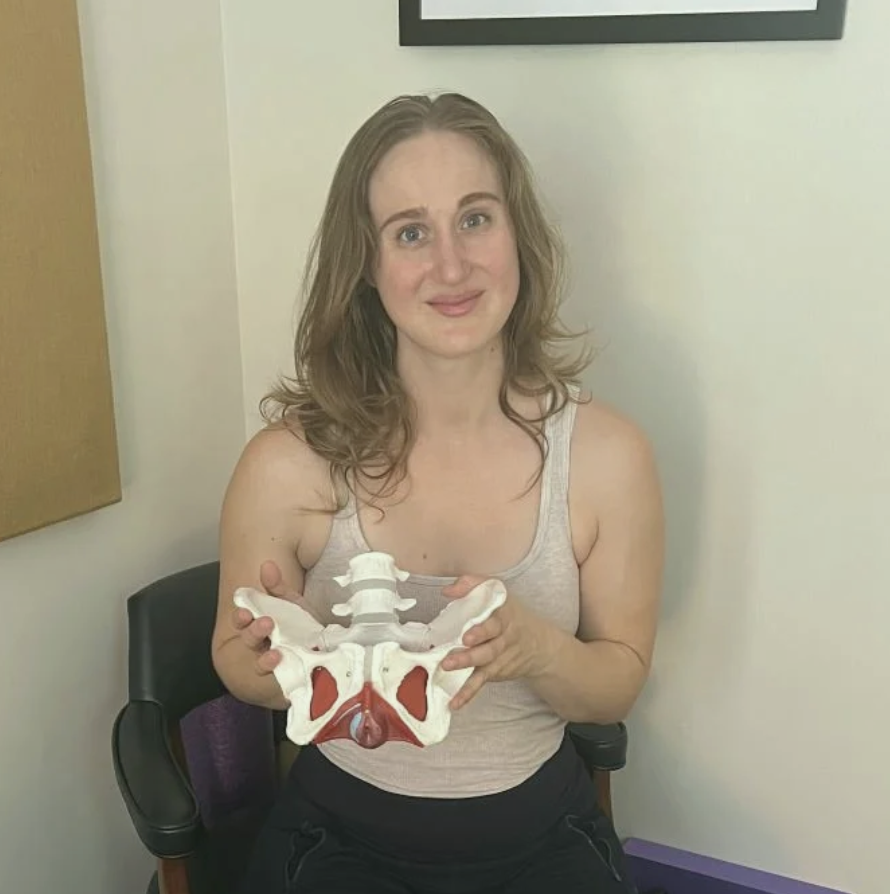
As the name implies, at Durham Pelvic, I specialize in the pelvis and pelvic floor.
So I work with pregnant and postpartum patients all the time!
I’ve seen patients who have had quick and smooth births and ones who have had long and complicated births.
I’ve seen patients who want to get back to running, some who want to get back to CrossFit, and still others who want to play with their kids without having pain.
I’ve seen first-time moms and moms on their sixth.
My point is that every woman is unique, so I tailor physical therapy to each individual patient. I want to help you live your best life - what that means and what it takes to get there will be different for everybody.
Safe early exercises to try at home
(Optional to include 2–3):
That said, there are a few basic exercises I usually recommend, especially in the early postpartum period (which I would define as the first 6 weeks).
If they don’t feel good in your body, then I wouldn’t include them until you can see a physical therapist (like me!) who can help you troubleshoot why they don’t feel good to you.
But hopefully they do feel good and will help you begin your postpartum recovery.
Cat/cow
Bridges (only opt to do the double leg bridge, not the bridge with one leg)
When to see a Pelvic Floor Therapist
So when should you see a pelvic floor physical therapist?
If you’re having pelvic pain that’s limiting your ability to walk, do tasks around the house, or otherwise exercise or function, please see a Pelvic PT.
Especially if the pain is not improving with time.
You are welcome to come to an appointment as early postpartum as you’d like. I would not perform an internal pelvic exam prior to your 6-week medical clearance with your OB, but I often see women much earlier than that as everything outside of the internal exam is completely safe.
And we can accomplish a lot without an internal exam because I don’t need an internal exam to look at your core or hips.
I’m biased and am going to say that every woman should see a Pelvic Floor PT after birth to help optimize their postpartum recovery!
Working with a PT in the postpartum period can help prevent future pelvic health issues, help you feel your best, and help you get back to everything you want to do. I truly believe it should be the standard of care.
A personal story from a postpartum patient of mine
On a related tangent, please allow me to tell you a story.
When I first began my career, I worked in Jacksonville, NC with many active duty members and their spouses.
I always remember one European military wife who came to my office after just having had a baby.
I went through a thorough exam but couldn’t find much “wrong” with her. At the time, I was fresh out of school and had been trained to only think of PT as treating symptoms.
So I sheepishly asked her what she was there for if she wasn’t having any issues and looked pretty good as far as I could tell.
She replied that she had had a baby so she was here for her check because everyone in her home country went to pelvic PT after giving birth.
Now, I see clearly that she had it right all along.
If we are more proactive with our rehab, we can likely stop many symptoms from developing and truly optimize our health.
In my practice now, I prioritize helping patients with wellness just as much as I help them with illness, and it’s been incredible to see just how good people can feel, especially when postpartum.)
Where to find postpartum pelvic floor pt in Durham
If you are local to the Durham area and are looking for a pelvic health provider with expertise in postpartum physical therapy, I'd love to work with you.
To get started, reach out to schedule with me by filling out the contact form located here. You can always view my pelvic therapy rates on my website (transparency first).