Signs of a weak pelvic floor after childbirth

Whether you're currently pregnant or you've already had your baby, you're likely wondering a whole lot about your pelvic floor.
Pelvic therapy and the pelvic floor have become increasingly popular over the last 10 years (what a beautiful thing!), and that means that there are many folks, like you, who are connecting the dots of the pelvic floor and how things like pregnancy and childbirth affect the pelvic floor.
Unfortunately, many pelvic symptoms are brushed off by providers who may not be familiar with the extent of pelvic therapy or who are stuck in the old ways of thinking:
"This is just something that you have to deal with now that you've had a baby."
"Welcome to the new moms club."
"It just is what it is."
As a pelvic therapist, I've heard these stories time and time again and I want to assure you that this is NOT true. And that's exactly why I want to talk to you about pregnancy, childbirth, and your potentially weak pelvic floor.
Pregnancy and childbirth affect the pelvic floor muscles and their ability to function fully, which can contribute to pelvic floor symptoms. This blog will walk you through typical pelvic floor function and the signs and symptoms to look out for to figure out if you have "weak" pelvic floor muscles.
What the pelvic floor does
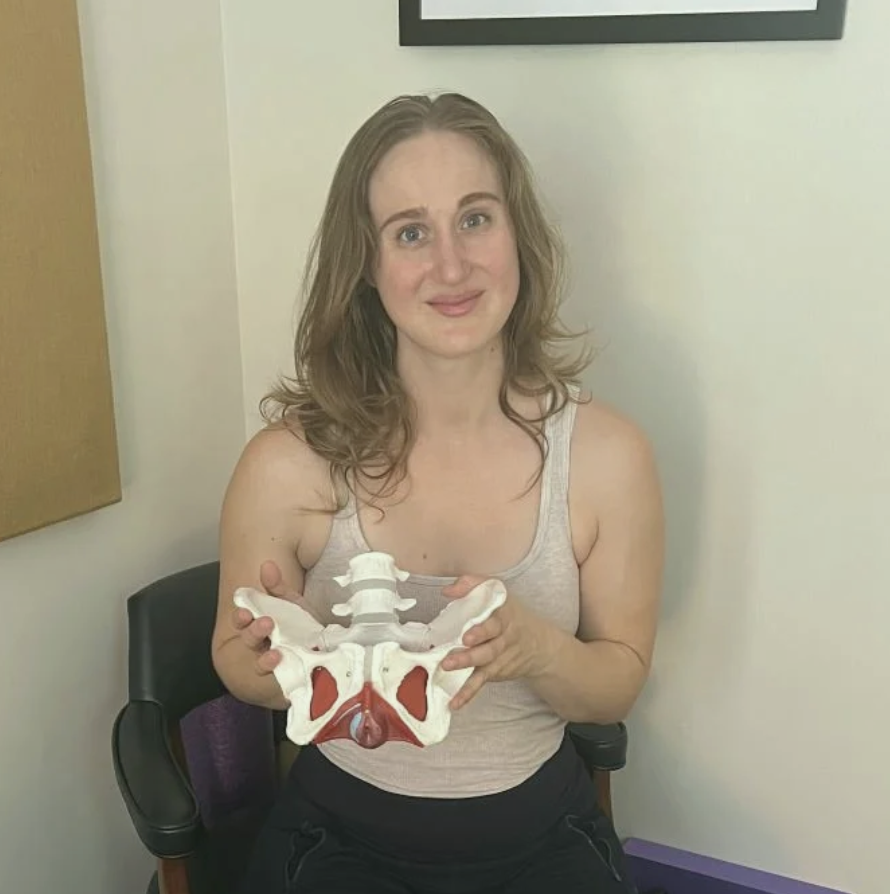
The pelvic floor is a group of muscles that sit at the bottom of the pelvis. They support all of our organs, all day long. I like to think of them as the ultimate posture muscles because they never really get a break!
Because these muscles support our organs, dysfunction in the pelvic floor usually shows up as problems with the bowel or bladder. Those two organs sit right there in the pelvis, so they're the first to feel it.
When you're pregnant, you're adding a lot of weight on top of those muscles: the baby, the fluid around the baby, and any extra weight that comes with a healthy pregnancy. That means the pelvic floor has to work harder than usual to keep everything supported…
...for 9+ months!
When the pelvic floor is functioning optimally, we are free from symptoms like leaking (urinary incontinence), prolapse (bulging of our organs inside of our vaginal canal), pain, sexual dysfunction, heaviness, and abnormal bowel movements.
How childbirth affects the pelvic floor
In order to give birth to baby, the pelvic floor muscles and connective tissue must be able to relax and lengthen. That's something we can work on in pelvic floor PT during pregnancy btw!
When the pelvic muscles lengthen and stretch during vaginal delivery, they do not behave like a rubber band that just snaps back into place after birth is "over". The muscles will take some time to recover, which can lead to symptoms of pelvic floor dysfunction, which I'll cover in a minute.
And don't forget: those same muscles have had extra pressure sitting on top of them for 9+ months already. They've been working hard for quite some time!
If you have a cesarean section, that doesn't mean your pelvic floor muscles are unaffected; they have been working for 9+ months as well and have accommodated to a lengthened position, which can also cause pelvic floor weakness and general pelvic health issues.
Here's what I want to make super clear: Having pelvic floor weakness after childbirth (vaginal or cesarean) is expected. But that doesn't mean you have to "just deal with" the symptoms or accept that your pelvic floor muscles will always be weak.
There are things you can do to mitigate symptoms entirely, improve healing time, and ensure that the recovery of your pelvic floor is optimal.
How long does recovery take?
This is one of the most common questions I get, and recovery looks different for everyone.
How long you were in labor, whether you had a vaginal or cesarean delivery, whether you had any tearing or interventions, your activity level, your overall health... all of these things play a role.
That said, early postpartum (the first 6-8 weeks) is your body's initial healing phase. With the right support during and after that phase, it can be a true gamechanger.
What I don't want you to do is wait and hope that things will just go back to normal on their own. Sometimes they do! But if you're still experiencing symptoms at 3 months, 6 months, or even years postpartum, please know that it is not too late to seek help. Pelvic PT can be effective long after delivery.
Common signs of weakness after delivery
So now the good stuff: The typical signs of pelvic floor weakness after delivery.
If you have any of the following, this can be a sign that your pelvic floor is weak:
Urinary incontinence (leaking with laughing, coughing, sneezing, lifting, running)
Pelvic organ prolapse of various grades
Fecal incontinence
Pelvic pain
Pain with return to intercourse
Return to exercise has not been without leaking, pain, or feeling unstable
Shoulder pain and upper back pain (typically related to feeding positions)
Low back pain
Core instability
Diastatis recti (abdominal separation)
...but wait a second: These symptoms are not JUST at the pelvic floor level??
Exactly. Your pelvic floor is more than just the pelvic floor muscles. It's an entire system that helps with stability, support, sexual function, and urinary and bowel health.
Signs of pelvic floor weakness (and muscles that are not coordinating properly) can extend well beyond the pelvic floor muscles.
And beyond the physical symptoms, it's worth acknowledging that these things can have a real emotional impact too. Leaking when you laugh, avoiding exercise you love, or experiencing pain with intimacy all affect how you feel about your body, your confidence, and your relationships.
That is completely valid, and it's one more reason why you deserve proper support, not just accepting it as a "welcome to motherhood" badge of honor.
What to do about pelvic floor weakness postpartum
Here's the thing: I'm going to tell you that I believe everyone should be referred to pelvic floor physical therapy to get postpartum pelvic floor PT after they give birth, whether that be cesarean or vaginal.
Pregnancy and birth are major events. A C-section is a major surgery.
Women are amazing. And that's exactly why I do believe that they deserve the same type of support that anyone gets when they have a surgery: specific recovery and rehab!
I said it above, but pelvic floor weakness after giving birth is completely normal. You CAN just go about your life and hope that the weakness returns to your baseline and you're able to get back to living your life without any of the symptoms listed above.
But, if you're interested in optimizing your recovery, ensuring that you heal well, and mitigating any symptoms you may have/avoiding the onset of symptoms secondary to pelvic floor weakness, then pelvic PT is exactly what I'd recommend.
Do I have to wait until my 6-week check-up?
This is such a common misconception! Many people assume they have to wait until their 6-week postpartum appointment before doing anything about their pelvic floor.
In many cases, that's simply not true.
There are things we can address in early postpartum like breathing, gentle movement, education about positioning and pressure management that are completely safe and helpful for your recovery.
So if you're reading this in those early weeks and you're already noticing symptoms, you don't have to sit and wait. Reach out and we can talk about what's appropriate for where you are right now.
Where to find postpartum pelvic floor physical therapy in Durham
If you are local to the Durham area and are looking for a pelvic health provider with expertise in postpartum PT, I'd love to work with you.
To get started, feel free to reach out to schedule with me by filling out the contact form located here.