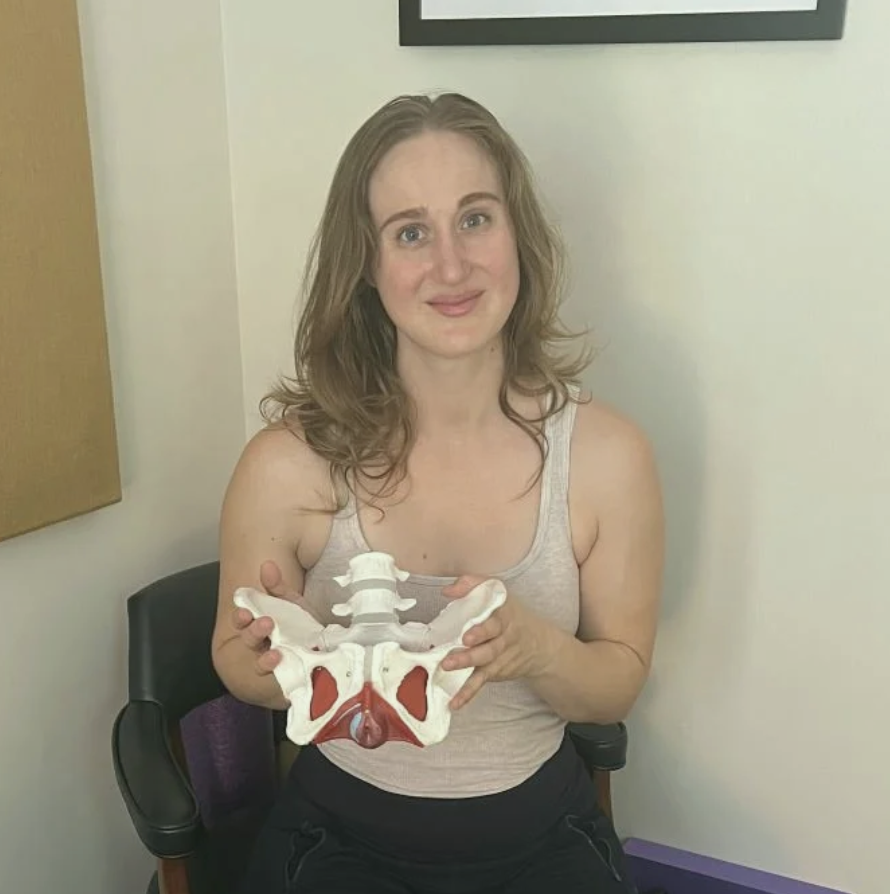
How does a pelvic floor therapist examine you?
A pelvic floor physical therapist examines you through a combination of a detailed health history interview, general physical assessments (strength, range of motion, and movement screening), and, when appropriate, an internal pelvic examination. The internal exam involves a gloved, lubricated finger inserted vaginally (and sometimes rectally) to assess pelvic muscle strength, tone, tenderness, and coordination. The exam is always consent-based, performed in a private setting, and guided by ongoing communication throughout to treat pelvic floor dysfunction and pelvic symptoms like pain, leaking, difficulty with bowel movements, pain with intercourse, and more.

If you've been thinking about pelvic floor physical therapy but aren't sure what actually happens during an appointment, you're not alone. It's one of the most common questions people have for me and one of the most important ones to answer before you ever walk through the door.
Here's a straightforward look at what to expect.
Your health history
Before anything hands-on happens, we talk. Your first appointment begins with a thorough intake and interview, where I ask a lot of questions about your medical history, your symptoms, and what's been going on in your body.
Every detail matters here. The full picture, not just the symptoms you think are relevant, is what helps us figure out what's actually driving the problem. Many patients tell me that I'm one of the only providers to truly listen to their whole story. And I take pride in being that type of provider. I want to know every detail, because it all matters.
The initial pelvic assessment
After the health history, we move into a general physical assessment. This includes:
A general health screening
Strength and range of motion testing
Movement screening
None of these need to be intimidating.
You're always in control.
If a movement is uncomfortable or you can't do it, that's useful information for both of us and something I see a lot! It's all just data that helps guide your treatment.
The internal pelvic floor exam: What it is and what it isn't
This is usually the part people are most curious (or nervous) about when it comes to a pelvic floor evaluation or pelvic floor PT in general.
A pelvic health specialist is different from a general physical therapist largely because of the internal pelvic examination. It's what allows us to properly assess pelvic muscle function, tension, and coordination, which are things that simply can't be evaluated as precisely from the outside.
Here's what it actually involves: I wear gloves and use a lightly lubricated finger to gently examine the pelvic floor muscles through the vagina, and sometimes the rectum if it's relevant to your specific condition and you've agreed to it. This is much different than an OB/GYN exam; there is not a cold speculum involved at all (I know you know).
During the exam, I'm evaluating:
Muscle strength
Areas of tenderness or trigger points
Resting muscle tone
Your ability to contract and relax voluntarily
Overall muscle coordination
The exam takes place in a cozy, private treatment room, with real bedsheets, so it’s a quite different setting than what you may be used to at an OB/GYN's office.
What to know about the internal exam
This is important: the internal exam is never something that just happens to you. I explain what I'm doing and why throughout the entire process, and I continuously ask for your consent to continue. You can stop at any time and can also request that we skip the internal exam.
After we do your general exam, I'll step out of the room to allow you to undress for the internal exam. You're never fully exposed and preserving your modesty is of the upmost importance.
I specialize in working with people who have pelvic pain, so minimizing discomfort is always a priority. Most people find the exam is much less uncomfortable than they expected it to be.
What happens after the exam
Once the examination is complete, I'll walk you through everything I found and, more importantly, help connect those findings to the symptoms you've been experiencing. You'll leave with a clear picture of what's going on and a treatment plan built specifically around your presentation and goals.
We'll also map out a realistic plan of care for how often we'll meet (typically weekly at the start) and a rough timeline for how long we might work together.
What follow-up sessions look like
Pelvic floor therapy with me isn't passive. You won't be lying on a table the whole time, and you won't be coming indefinitely without a clear endpoint.
Sessions pull from a mix of manual therapy, targeted exercise, and education. We address the pelvic floor directly, but we also work toward the root cause — because the pelvic floor rarely exists in isolation from the rest of the body.
If a specific activity triggers your symptoms like running, jumping, lifting, we'll work on that directly, too.
How to get started with pelvic floor therapy in Durham, NC
If you are local to the Durham, NC area, I'd love to work with you inside my pelvic health physical therapy clinic. My clinic specializes in pelvic health and pelvic health treatment. Not just a part of what I do, but what I specifically do.
Pelvic floor PT can be intimidating, and pelvic floor conditions can feel embarrassing, hard, lonely, and frustrating. I'd love to help you overcome the pelvic concerns you have and get you back to feeling 100%.
If you’re ready to get started, please request an appointment. I'd love to help you.